Portrait
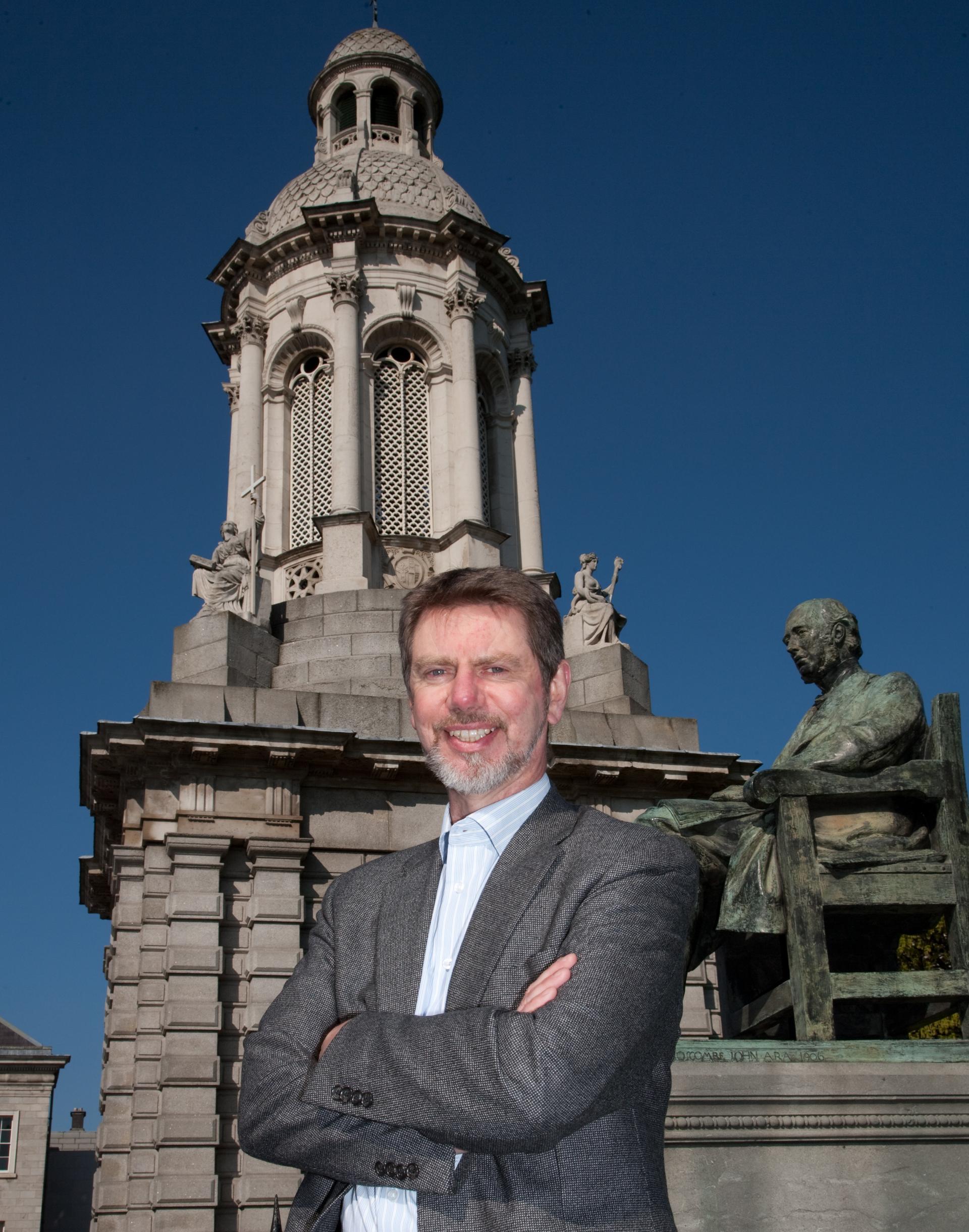
Poul Holm - Professor at Trinity College Dublin, Ireland
Portrait
Poul Holm - Professor at Trinity College Dublin, Ireland
Poul Holm - Professor, Trinity College Dublin, Ireland
Portrait
Portrait
About Poul Holm
The article is more than 30 days old and reflects the career of the alumni at the relevant time. The alumni may have changed career paths since the article was written.
The portrait is personal and reflects the alumnus's own opinion.
Knowledge and curiosity are my industry. I began my career as a curator at the Fisheries and Maritime Museum in Esbjerg and have since become a professor of environmental history, led several major research projects involving 30 to 50 researchers, and served for a period as a university rector. Through many years of involvement in Danish and European research policy, I have learned how important it is to explain why the humanities matter, including to people who do not work in research themselves. I am fortunate to work in a field of research, the relationship between humans and the sea, where history reveals that many of today's environmental and societal challenges have deep historical roots.
I lead a research centre in Dublin and am currently writing a book about the North Atlantic together with a close colleague in Canada. I am approaching retirement, but I have no intention of giving up my hobby, which fortunately is also my profession. One of the greatest benefits of recent technological developments is that geography no longer determines who you can collaborate with.
Share your knowledge and expertise. Your best colleagues will return it many times over. Identify talented people and give them room to grow.
Curiosity, curiosity, curiosity. It remains my greatest driving force. History reminds us that the world almost always develops differently from what we expect. For that reason, historical research is not about predicting the future but about becoming better at understanding change, both the dramatic events and the slow-moving processes that shape our lives.
As a travelling companion, I would choose Fernand Braudel’s monumental work "The Mediterranean and the Mediterranean World in the Age of Philip II". He wrote much of it while a prisoner of war during the Second World War. The book deals with human folly, power, and conflict, but also with the slow rhythms of nature, which often put human dramas into perspective. These are valuable insights to carry with you. And Braudel never stopped wondering. I hope I never do either.
I know exactly why, because I was asked that question in my final year of upper secondary school, and my answer was rather precocious but true: as a historian, you simply get better with age. As a child, I loved walking across ploughed fields, searching for archaeological finds, and reconstructing the past in my imagination.
Historians build models of the past. The more traces we discover, the better those models become. The more we read and the more we find, the better historians we become. Today, I would add that the digital revolution gives us access to far more data than any individual can fully absorb. Yet it is still our ability to interpret that data that improves with age.
Fearlessness in the face of authority. Project-based learning taught me to seek out people who truly know something and to distinguish between talk and insight. The best researchers are always motivated by good questions, whether they come from a young student or a distinguished professor.
During my years at AAU, I was given both the financial support and the confidence to seek out leading scholars such as Viking Age historian Peter Sawyer and the exceptionally learned Donnchadh Ó Corráin, and to travel to Klaksvík to study the Faroese fishing industry. I quickly discovered that most people were actually delighted by the visit. I have continued doing that ever since.
Reading Icelandic sagas with Professor Lars Lönnroth. Not many students were interested in his specialisation, medieval literature, but those of us who were received teaching of the very highest calibre. His energy and journalistic instinct, grounded in profound scholarship, were extraordinary.
At the same time, he had a remarkable ability to communicate complex ideas. Just think of his book "From Edda to ABBA" or his later work as a cultural editor in Sweden. I am still amazed by the vitality he radiates well into old age.
Give it a try! You will be wrong from time to time, but that is how you improve.
Do not stay stuck. If an opportunity does not present itself, go and find it by moving on.
I have never been particularly good at staying where I was, either geographically or professionally, and I have yet to regret a single detour.
LinkedIn: Poul Holm
Do you want to view more portraits or create your own?