Portrait
Asifa Awan - engineering as a way to turn composite waste into a valuable resource
Published online: 24.02.2026
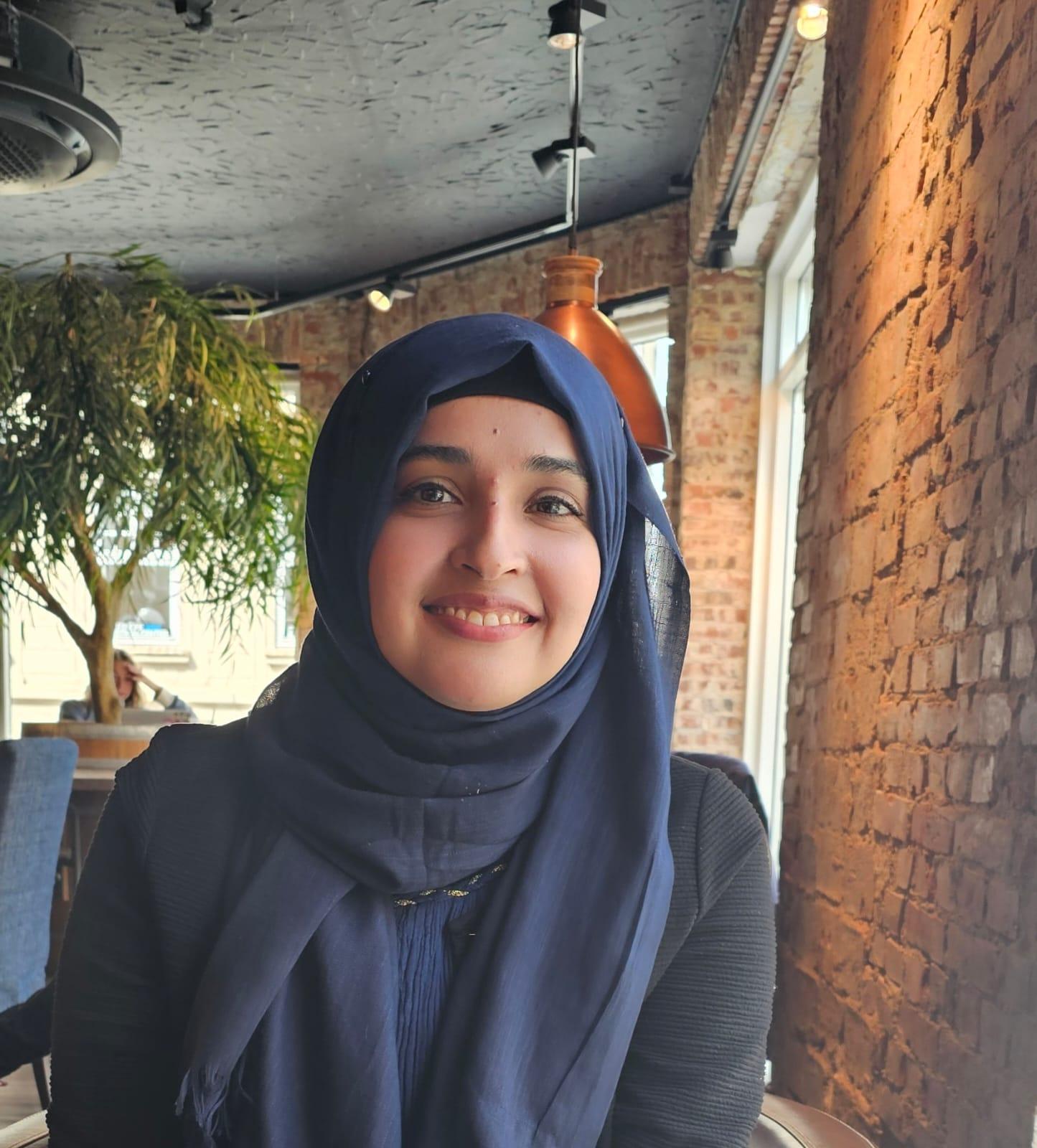
Portrait
Asifa Awan - engineering as a way to turn composite waste into a valuable resource
Published online: 24.02.2026
Portrait
Published online: 24.02.2026
Portrait
Published online: 24.02.2026
About Asifa Awan
The article is more than 30 days old and reflects the career of the alumni at the relevant time. The alumni may have changed career paths since the article was written.
Looking for new opportunities
My interest in this field developed from working with advanced composite materials and realizing that their excellent performance comes at a significant environmental cost.
I became particularly motivated by the gap between how widely composites are used in sectors like wind energy and transportation, and how poorly they are handled at the end of their life. This led me to focus on chemical recycling and surface engineering as ways to turn composite waste into a valuable resource rather than a disposal problem.
What drives me most is transforming materials that are traditionally considered waste into high-value resources. I am particularly passionate about combining chemistry, materials science, and engineering to solve real industrial problems, especially restoring the functionality of recycled fibers so they can be reused without compromising performance. Seeing laboratory research move closer to scalable, practical solutions is what motivates me.
In the long term, my research can support a more circular and sustainable use of high-performance materials. By enabling the reuse of chemically recycled glass and carbon fibers, it can reduce landfill waste, lower carbon emissions, and decrease dependence on energy-intensive virgin materials.
This contributes to more sustainable manufacturing in sectors such as wind energy, transportation, and construction, which are central to the green transition.
Treat your PhD as a long-term project in problem-solving rather than a series of experiments. Progress is rarely linear, and setbacks are part of the process, not signs of failure.
Focus on understanding the fundamentals of your work deeply, document everything carefully, and learn to communicate your research clearly to both experts and non-experts. Just as importantly, protect your well-being and remember that persistence, not perfection, is what ultimately carries you through a PhD.
PhD students should think early about how their research skills translate beyond academia.
Technical expertise is important, but so are transferable skills such as project management, data analysis, communication, and collaboration. It is also valuable to seek exposure to industry, interdisciplinary projects, or applied research, especially if your work has real-world relevance.
Keeping an open mind about career paths and actively building a professional network can make the transition after the PhD smoother and more rewarding.
Behind the research, I am someone who values perseverance, curiosity, and purpose. I enjoy tackling complex problems that require patience and interdisciplinary thinking, and I find motivation in work that has clear societal relevance. Outside research, I value meaningful conversations, continuous learning, and balancing technical rigor with creativity and resilience.
Do you want to view more portraits or create your own?