Portrait
Jacob Bollerslev - power system engineer
Published online: 21.09.2026
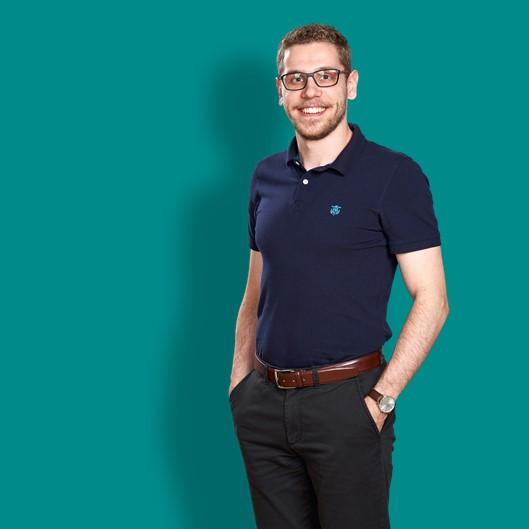
Portrait
Jacob Bollerslev - power system engineer
Published online: 21.09.2026
Jacob Bollerslev - power system engineer
Portrait
Published online: 21.09.2026
Portrait
Published online: 21.09.2026
About Jacob Bollerslev
Energinet
I have been interested in power systems from a young age and always wanted to become a power system engineer. During my master’s studies, this interest developed into a more specific interest in power system stability and the challenges associated with integrating converter-based renewable energy sources.
After graduating, I worked with these challenges at Energinet for two years, which further strengthened my interest in the field. When the opportunity arose to pursue an industrial PhD within Energinet, it therefore felt like a natural next step.
Creating value that has a real and tangible impact is what motivates me most. I enjoy going into areas where the answers are not yet known, understanding complex challenges, and developing new knowledge that can be applied in practice. During my PhD, this has meant exploring new stability challenges in the future power system and developing better ways of understanding and assessing them.
I find it particularly rewarding when complex research can be translated into something that supports real engineering decisions. Ultimately, being able to contribute to the secure integration of renewable energy and help us navigate the green transition is what makes the work meaningful to me.
The long-term impact of my research is to support a secure and reliable transition to a power system with much larger shares of renewable energy. As the power system changes, new stability risks arise that need to be identified, understood, and managed.
My research aims to assess these risks more systematically, highlight the operating conditions that require particular attention, and support more targeted solutions together with manufacturers and plant owners. In the longer term, this can contribute to integrating renewable energy more securely and efficiently while reducing the risk of instability and major disturbances. Ultimately, the goal is to enable the green transition without compromising the security of the electricity system.
One thing I have learned during my PhD is that research never really finishes. You often start with a known challenge, but by the time you have addressed part of it, you have uncovered several new challenges along the way. At some point, you therefore have to accept that the goal is not to solve everything, but to find a good place to stop.
Your work will never be perfect, and I think it is a strength to be open about its limitations, because those limitations often point toward the next questions that should be explored. The contribution of any individual PhD is only one small step, and research is ultimately about building on each other’s knowledge over time.
After obtaining the PhD, you can either continue the research yourself or leave behind a contribution that others can build on. In that sense, a PhD is a stepping stone into the research-oriented world rather than an endpoint.
Behind the research, I am a curious and driven person who enjoys learning new things and taking on new challenges. I have always been interested in technology and in understanding how things work, which naturally led me toward engineering. I also like to surround myself with people I can learn from, both professionally and personally, as I value different perspectives and experiences.
Outside of work, I enjoy being active, especially running, swimming, diving, trail walking, and bouldering. I also value spending time with friends and family and having a good balance alongside my professional life.
Do you want to view more portraits or create your own?