Portrait
Betül Özkaya - researching emotions to understand social inequality
Portrait
Betül Özkaya - researching emotions to understand social inequality
Betül Özkaya - Postdoctoral Researcher
Portrait
Portrait
Blue Book for Betül Özkaya
The article is more than 30 days old and reflects the career of the alumni at the relevant time. The alumni may have changed career paths since the article was written.
The portrait is personal and reflects the alumna’s own views
Postdoctoral Researcher, Aarhus University
For as long as I can remember, I have been attentive to both my own and others’ emotions. I believe this is connected to growing up in the intersection between multiple cultures. From an early age, I learned that integration is not only about language and work, but also about emotional adaptation. Being “well integrated” also meant being able to read the emotional landscape around you and adjust accordingly. I therefore quickly became aware that there are different ways of expressing emotions – depending on where you are and who you are with.
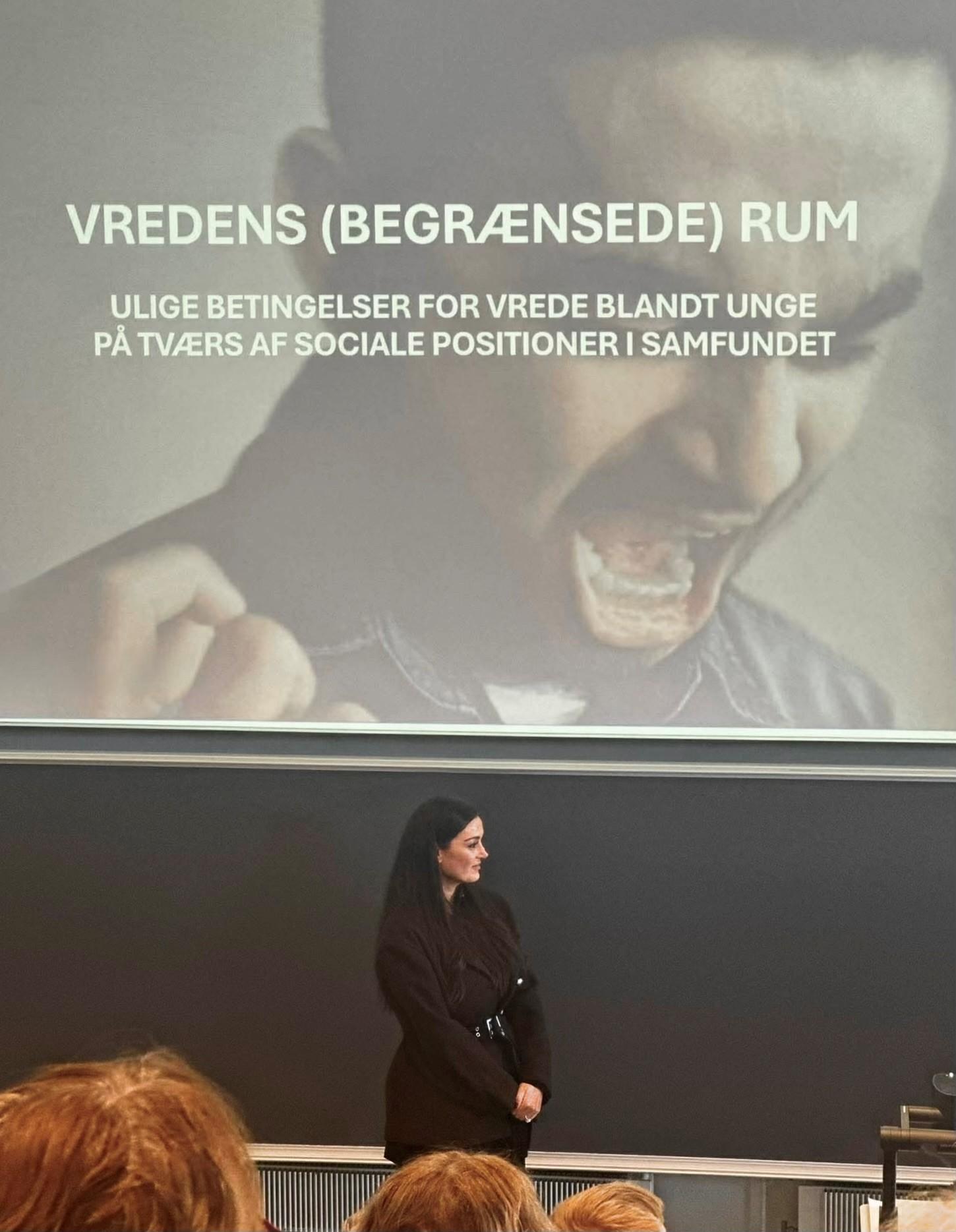
Today, I know that anger is not a feeling we all have equal access to. Some people can raise their voices and be heard. Others are perceived as “too much,” “too emotional,” or “too uncontrolled.” This inequality became a professional concern during my master’s studies in sociology, when I began immersing myself in the sociology of emotions. Here, I found the language I had been missing: a language that explains how emotions do not only reside in the body, but also in societal structures and norms.
Anger is a universal emotion that can arise for many reasons, but it is often closely linked to experiences of injustice. We often become angry when we perceive something as wrong – something that should be different. For that very reason, anger holds an important and often overlooked potential: it can act as a driving force for action and thereby create opportunities for change.
However, this potential is not equally accessible across social positions such as class, gender, ethnicity, and skin color. In other words, there is inequality in who has and who does not have access to anger as a tool in the struggle against injustice.
Anger can therefore serve as an entry point for examining social inequalities in society. That is precisely what I am most passionate about in my research. You could say that I am interested in where anger connects to broader societal inequalities. Inequality is undoubtedly my primary motivation.
My PhD thesis has identified a more fundamental need to rethink society’s understanding and handling of anger. If certain young people are systematically denied the opportunity to express anger over injustice, it not only restricts their emotional lives, but also their democratic agency. This undermines their ability to participate as full democratic citizens in society.
In practice, the findings can be used to prevent this inequality. For example, they can be applied by professionals working with young people such as teachers, pedagogues, and social workers to develop a more nuanced understanding of conflicts and to better support youth who feel that their emotions are not acknowledged. On a broader level, the research can inform initiatives and policies that take into account that young people have different opportunities to be heard and understood when they experience injustice.
And this is important: if access to legitimate anger is limited based on one’s social and symbolic position in society, it means that certain groups are systematically excluded from the opportunity to challenge inequality and injustice – a condition that constitutes a significant democratic issue in any society.
Do not be afraid to bring yourself into your research.
We all carry a “backpack” of experiences that shape how we see the world. If we use that backpack consciously and reflectively, our human experiences can open up perspectives, questions, and nuances that would not exist without us.
Do what you are passionate about – this is often where the stakes are highest, and therefore also where we create the strongest research and the greatest potential for change.
Although I was born and raised in Denmark, my name reveals that my background is not Danish. My grandfather, Muhittin Özkaya, left his village in Turkey in 1970 for a foreign country with the hope of giving his children and future grandchildren a better life than he himself had. It is a story that has deeply shaped me and one that I carry with pride in both my name and my research.
Do you want to view more portraits or create your own?