Article
Data is here to stay. Get ready to use it - correctly
Article
Data is here to stay. Get ready to use it - correctly
Data is here to stay. Get ready to use it - correctly
Article
Article
Whereas a few years ago, data science was a field mostly relevant to major companies, the recent development within digitalisation means that practically every size and type of company has access to data that can potentially make a marked difference on their everyday operations.
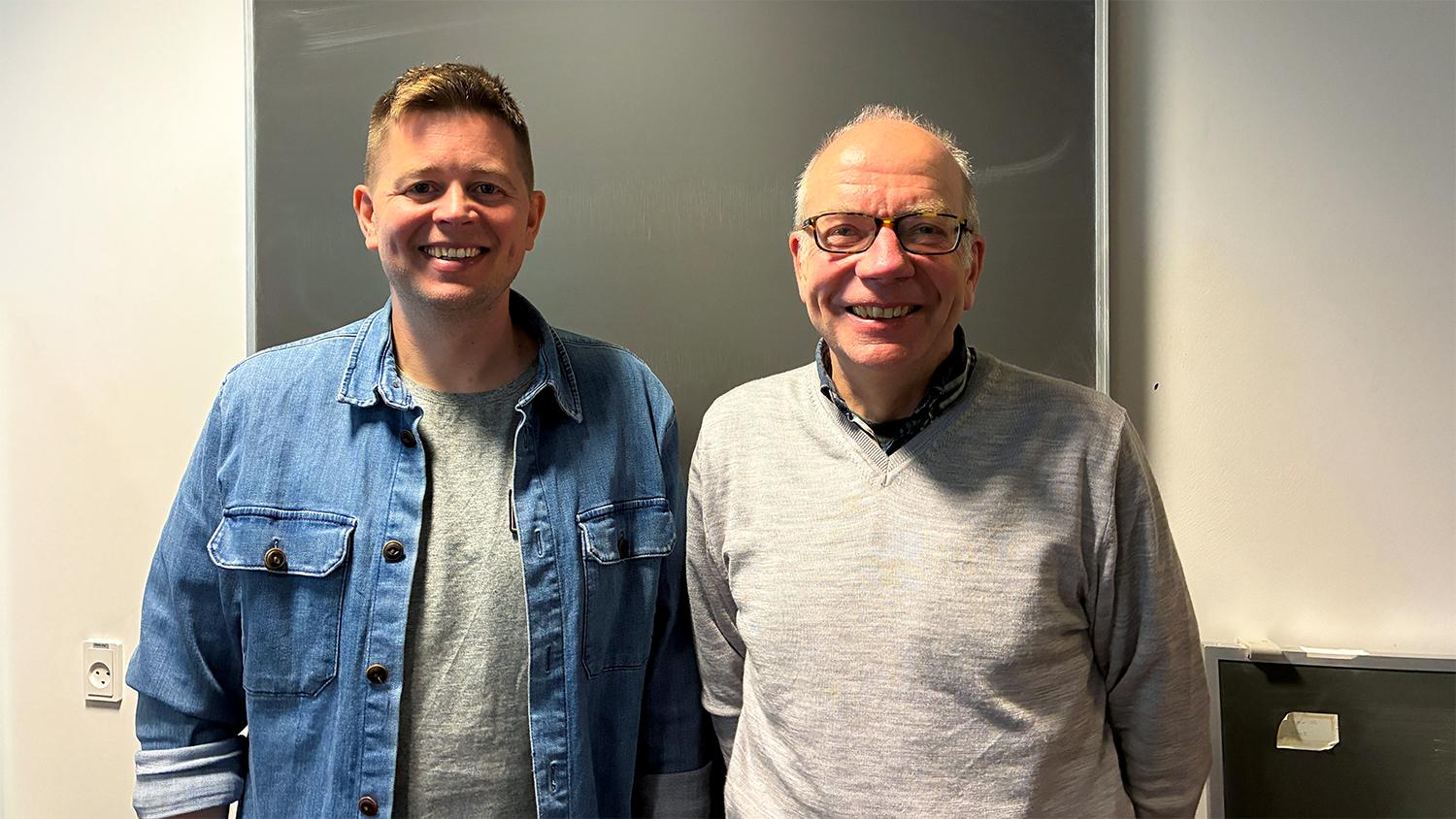
As of now, Denmark is a leader within digitalisation – including the utilisation of data – but we need to get a lot more companies in the game, say Associate Professor Manfred Jaeger, Department of Computer Science, Aalborg University, and Associate Professor and Head of Programme Mikkel Meyer Andersen, Department of Mathematical Sciences, Aalborg University.
The two departments are behind the part-time professional Master of Applied Statistics (MAS), which enables companies to upskill their specialists with competences within data science, AI and statistical analysis.
Associate Professor Manfred Jaeger explains:
”Data is becoming more and more available and important in all kinds of industries. Classically, you of course have fields such as, say, medicine, energy or finance, but nowadays it’s everywhere. The rapid digitalisation means that more and more industries get the chance to integrate data into their products or processes – and this is a potential that Danish companies cannot miss if they want to stay ahead of their game.”
Manfred Jaeger points to district heating plants as an example where data plays an increasingly crucial role:
”Every type of digital equipment you install generates data. Add to that data that can be retrieved from the web, and even industries that traditionally would not be considered data-intensive will now have access to data collections that open new opportunities. These days, the district heating plants generate heat from a variety of different sources, including renewable; they have complex sensor networks monitoring their operations, and they participate in the energy trading market. To improve their operations – and minimise energy consumption and energy waste – they want to be able to make predictions about consumer needs and market conditions on the basis of the rich data they collect themselves, or import from external sources.”
This type of company – whether private or public – traditionally has a wide range of specialists on staff who are experts within their specific fields. With the MAS programme, these specialists can add a layer of data science skills to their current field of expertise, enabling them to utilise the available data in a focused and informed manner.
”We offer a strong trinity of subjects, combining data science with statistical analysis and AI tools. This means that the participants get the skills to 1) gather, combine and manage data, 2) select and use relevant AI tools (or other statistical methods, where AI is not necessary or relevant) and 3) assess and interpret the results and incorporate them into their specific field of expertise,” says Head of Programme, Associate Professor Mikkel Meyer Andersen of the Department of Mathematical Sciences.
One key point about the Master of Applied Statistics is that it is not only relevant to large companies with access to big data, but also to smaller companies who wish to utilise, say, customer data or product use data to improve operations, sales and marketing efforts.
“The programme is relevant to companies who have perhaps done their data collection and analysis in Excel until now, but who have hit the ceiling of what they can do in that setup. With this programme, they get the skills to take their data utilisation one step further so that they can extract the valuable knowledge that is hidden in their data. They learn how to handle the data, they learn how to analyse it, and they learn how to correctly interpret the results they get – whether using traditional statistical analysis methods or AI tools,” says Manfred Jaeger.
Over the last couple of years, the market has been flooded with AI tools for data management and analysis. And whereas some can be relevant and helpful to companies, it is important to know which to use – and if they are even relevant, says Mikkel Meyer Andersen.
“You can say that in order to use AI tools, you need to know what to ask of them. To use an old saying, it is a good idea to have a driver’s license if you want to fully operate a car. And so, if you cannot program and don’t know what to ask for, how can you use generative AI? It’s not like people who don’t know how to analyse data will suddenly learn how to do it just by asking AI. They will get answers, but they will not know how to interpret them correctly, they will get tricked, and they will get false signals if they are not careful.”
This means that while AI tools may seem like an easy solution to get started with data analysis, companies need to be aware of when and how they use them. Some of the data management and analysis that these companies need to perform can just as easily – and more accurately – be done through well-known methods and techniques, rather than with more or less mature AI tools.
“We prepare the participants to critically judge, on the one hand, the type of data they have available and the purposes for which they wish to use it, and on the other hand, the open source Python tools and AI tools available to them, so they can take informed decisions on which tools should be used for which type of data and which type of purpose. This also includes considerations of data protection – you cannot just upload, say, confidential medical information into an open AI tool,” Manfred Jaeger says, and Mikkel Meyer Andersen adds:
“We give the participants an understanding of how these AI tools work – also in contrast to more traditional statistical methods - so that they can make informed assessments of the results they provide. In order to use these tools, you need to understand things like uncertainty and probabilities. We like to say that we teach them how to be sceptical in a structured manner – which in the end enables them to refine the results so they give them a firm basis for decision making.”
Read more about the MAS programme at mas.aau.dk. The application portal is now open – application deadline is 15 June 2026.