Helene Halkjær Jensen
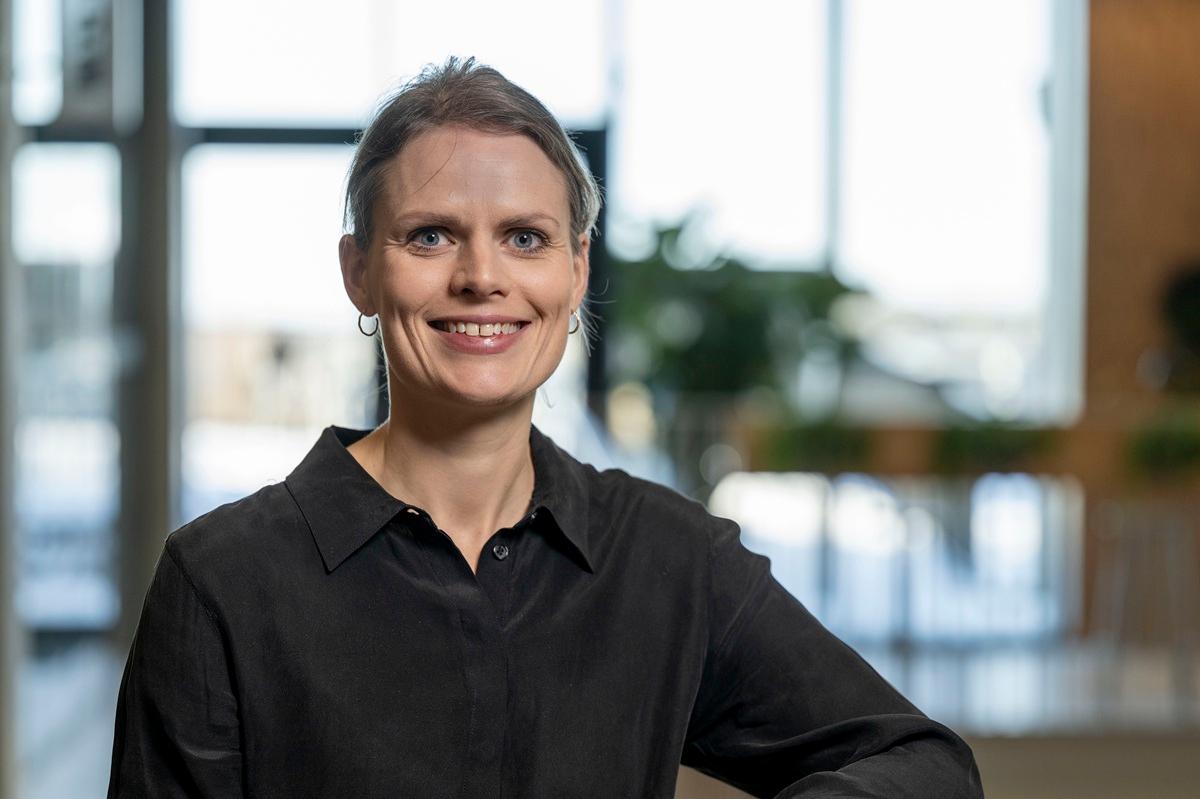
Helene Halkjær Jensen
Tomorrow we will be a little wiser and more skilled
Cell research can pave the way for new treatments for neurological and mental disorders in children and adolescents.
Can changes in our genes help explain why some children and young people develop mental disorders? This question is central to AAU Excellence participant Helene Halkjær Jensen's research.
In her work, she investigates how genetic changes affect the development and function of cells, and whether the effects that can be observed at the cellular level can contribute to the understanding of intellectual disability and autism, among other things.
Knowledge about genetic changes is crucial for the development of new treatments that can give more children and young people better conditions for coping with life. And it is precisely the desire to contribute new knowledge that makes a real difference that is the driving force behind Helene's research.
Motivated by advancing research
"I’m driven by a fundamental urge to contribute to the world, so that tomorrow we are a little wiser, more skilled or have better conditions than we have today. I think it's great to be instrumental in moving projects forward. At the same time, it is a privilege for me to have work days where I can immerse myself in an ultra-specialized corner of all the knowledge that exists right now," she says.
From hereditary heart palpitations to neurological disorders
As a cell biologist, Helene finds answers to many research questions by literally filming biology. She actually moved to Aalborg to be part of a project on hereditary heart palpitations because there was a need for her professional profile. Today, her research focus has shifted.
"Hereditary irregular heartbeat was and is an exciting project, and it laid the foundation for the research direction I continue with today. There is fantastic synergy in thinking broadly across several types of diseases; even within biology, we can learn something from each other."
Inspiration across national borders
Research stays at King's College London, Kyungpook National University in South Korea, the University of Maryland, and Goethe University Frankfurt played an important role in Helene's career and continue to do so.
"My area is largely driven by data, measurements and figures. The people behind the research are not always the focus in technical discussions. But in practice, research work is closely linked to the people and thinking behind it. That's why it's crucial for me to meet peers and discuss their work face-to-face, and not just read about it."
Strengthening the link between research, clinical practice and patient
Participation in AAU's Excellence programme is another career step towards a future position as research group leader.
"In five years, I see myself as the leader of a research group that investigates neurological disorders at the cellular level. My ambition is to strengthen the connection between clinical practice, patients and basic research. At the same time, I am working on implementing methods where we can study the patients' own cells in the laboratory. This allows us to be even more precise in our analyses of these disorders," says Helene Halkjær Jensen.