Kasper Tolborg
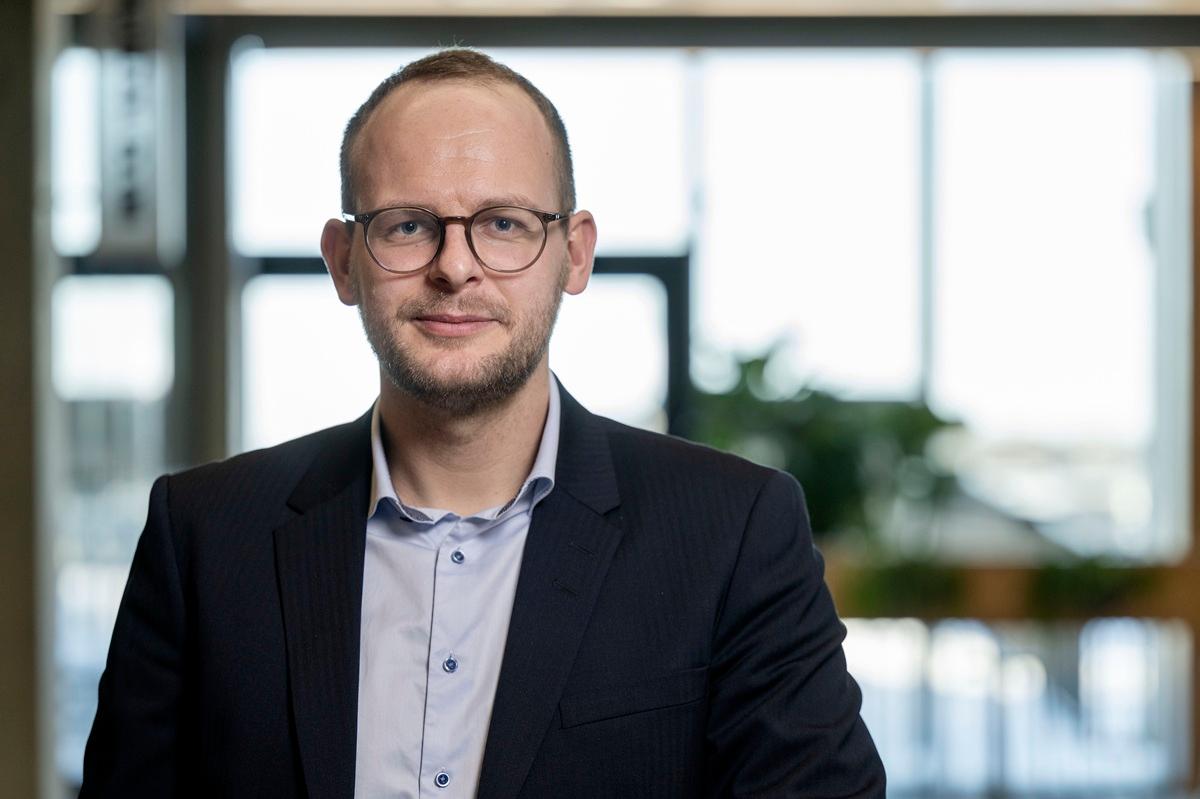
Kasper Tolborg
The search for the perfect material begins with the imperfect
With the help of advanced computer simulations, Excellence participant Kasper Tolborg develops new methods for handling disorder in the atomic structure of materials so that better energy solutions can be developed.
Most people would associate errors and irregularities with something that needs to be avoided. But in materials, it can be just the opposite. Small deviations in the structure of the materials can be actively used to develop better energy materials and thus contribute to the green transition.
Advances in computer hardware and artificial intelligence have opened up new possibilities for designing materials digitally. With the help of advanced computer simulations, researchers can now design the atomic structure of materials to develop better materials for applications like batteries, solar cells and other green technologies.
When disorder becomes a design tool
As a computational chemist in materials research, Kasper Tolborg uses computers and AI to investigate chemistry and materials at the atomic level. By performing simulations based on quantum mechanics, he can identify relationships between the structure and properties of materials on scales that are often difficult to study in the laboratory.
"In functional materials, the atoms are not perfectly organized in a regular pattern, but instead exhibit various kinds of defects or disorder that can either improve or destroy the desired properties. So, we are working on developing methods that make it possible to handle disorder in computational materials design to create new possibilities for designing materials with tailored disorder," he says.
Chemistry and the secrets of materials
Kasper Tolborg's interest in materials chemistry stems from a fundamental curiosity to understand why phenomena and materials behave the way they do.
In chemistry, it is specifically about breaking down systems into their most fundamental components: atoms, molecules and chemical bonds.
"Uncovering the secrets of chemistry and materials at a fundamental level is what motivates me the most, and if we can also use this insight to improve materials for applications in the green transition, that's even better."
An international springboard
It was an exchange stay in Milan during Kasper Tolborg's PhD that really kick-started his research in computational chemistry.
"After my PhD, I wanted to continue in this direction and work with some of the most talented researchers in the world. So, I moved to the UK where I was a postdoc at Imperial College London for two and a half years. The competencies I acquired and the network I built during this period are some of the most important driving forces of my research today."
Another driving force is collaborating with other researchers and supervising students at AAU.
"As I move into the role of research group leader, I also find great motivation in seeing research as a joint effort. It is particularly inspiring to experience how new discoveries arise through the creativity and commitment of the students I supervise and the researchers I collaborate with," Kasper Tolborg elaborates.
Pushing boundaries
Kasper Tolborg is in the process of building his own research group in computational materials chemistry.
"In five years' time, I hope to lead an internationally recognized research group that will help push the boundaries of how we design the materials of the future."