Meng Yuan
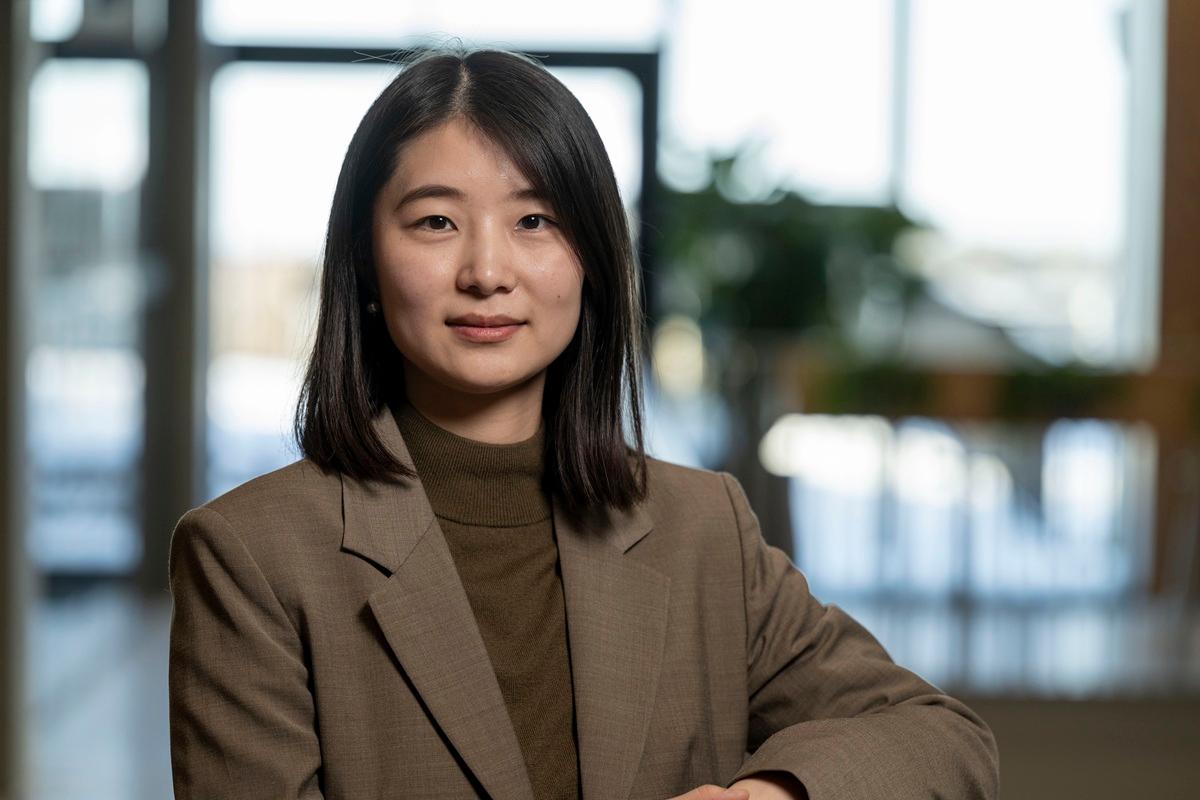
Meng Yuan
The green transition’s most complex puzzle
AAU Excellence participant Meng Yuan uses advanced energy system models to help decision-makers navigate the transition to a climate-neutral future.
As energy sectors become increasingly interconnected, decisions made in one part of the system can have far-reaching consequences across many others, making coordinated planning across the energy system and its supporting infrastructure more important than ever.
Meng Yuan’s research plays a central role in addressing these challenges through the development and application of sector-coupled energy system models. Her work analyses a wide range of energy technologies and examines how interactions among the electricity, heating and cooling, transport, and industrial sectors—as well as the infrastructures that support them—shape the pathways towards future energy systems.
Complex energy systems require new solutions
“Imagine solving a puzzle where every piece is constantly changing. New pieces are being added, the picture on the box is continually redrawn, and yet the puzzle must be completed while the world keeps moving. There is no option to pause the game. That is, in many ways, the challenge of long-term energy planning in the age of the energy transition and the focus of my research,” she explains.
The puzzle becomes even more challenging as emerging technologies such as Power-to-X, carbon capture, utilisation, and storage create opportunities to decarbonise the sectors that are difficult to electrify. At the same time, these technologies create new demands for hydrogen and CO₂ infrastructure, adding another layer of complexity to long-term energy planning.
“I use sector-coupled energy system models to investigate how long-term strategic energy decisions at the city, regional, and national levels can support robust investments and help societies navigate an increasingly complex and uncertain path towards climate neutrality.”
The big question: How can we make robust choices?
What motivates Meng Yuan as a researcher is the opportunity to work on challenges with real-world impact and to develop methods that can help decision-makers make robust and fit-for-context choices in an increasingly complex world.
“I became fascinated by a broader question: How can the energy decisions we make today help secure a climate-neutral future for generations to come? Over time, however, I came to realise that there is rarely a single ‘right’ answer. Energy planning research is highly context-dependent. What works in one city, region, or country may not work in another,” she says.
To see the bigger picture
Like many others concerned about our shared future, the growing urgency of climate change encouraged Meng Yuan to look beyond the debate between fossil fuels and renewable energy.
Her move from Beijing to Aalborg marked the beginning of a new chapter in her research career, exposing her to new cultures, research environments, and ways of thinking.
"I learned that the most meaningful solutions often emerge when different perspectives intersect, and that addressing complex energy challenges requires us to see the bigger picture across technologies, sectors, and societies. This experience has also made me more open, inclusive, and attentive to context. It has reminded me that valuable research does not exist in a vacuum. Research must consider the contexts, needs, and realities of the people and societies it aims to serve."
Exploring interdisciplinary collaboration in energy planning
Meng Yuan will use her participation in AAU Excellence to explore interdisciplinary research ideas in energy systems and energy infrastructure planning in collaboration with researchers in engineering, computer science, and the social sciences. This will include participation in international conferences and research stays abroad where she can exchange ideas and strengthen international collaborations. She will also take the lead in organising a workshop on artificial intelligence in sustainable energy planning.
"The purpose of the workshop is to bring together researchers from different disciplines to explore how new methods can support decision-making by not only addressing technical challenges but also improving our understanding of broader socio-technical barriers to implementation. These include issues such as the chicken-and-egg problem associated with the development of hydrogen infrastructure," she says.
Research with global impact
In the long term, Meng Yuan hopes to expand the international impact of her research by contributing to energy strategies and energy policy debates across different national and regional contexts. For her, energy planning is not only about developing models or strategies; it is about understanding real-world challenges and helping societies navigate complex energy transitions.
"My ambition is to take research beyond the walls of academia by translating knowledge into forms that can support policymakers and stakeholders, not only in the developed world, but also in emerging economies where transitions are often shaped by urgent social needs and limited resources. I hope to become known as a researcher who bridges disciplines, sectors, and perspectives, and who produces research that is academically rigorous, policy-relevant, and genuinely useful to society."