What does the engineer who will help solve the climate challenges of the future, develop new digital technologies, secure our critical infrastructure and create the next generation of intelligent products and systems look like?
These questions are central to the work on AAU strategy's theme 1, which reads: We strengthen our leading engineering position
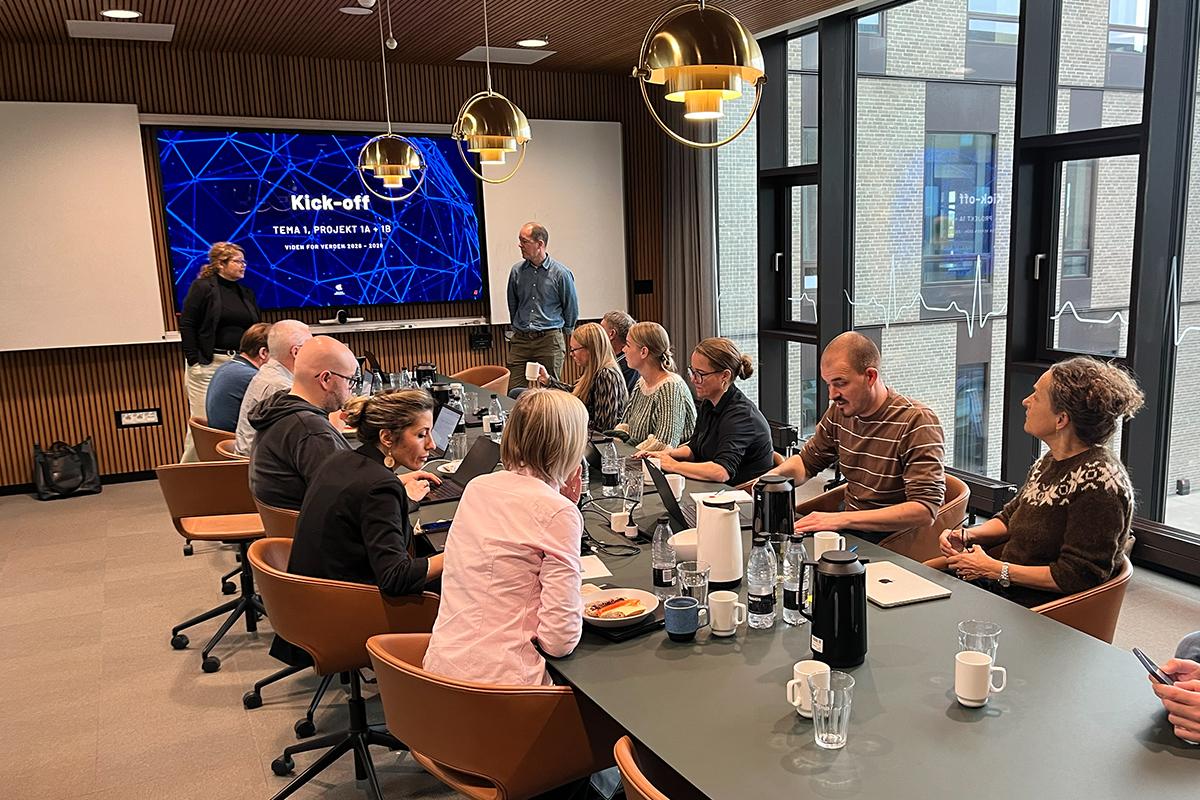
Tuesday, 6 October marked the start of ambitious development work where the university will rethink both its engineering programme portfolio and the curriculum that will equip the engineers of the future for a rapidly changing world. Vice heads of department and heads of studies the Faculty of Engineering and Science, Faculty of Medicine, and Technical Faculty of IT and Design took part, as well as a representative from the Institute for Advanced Study in PBL.
The work will contribute to maintaining and expanding AAU's position as an internationally recognized engineering university with particular strength in problem-based learning and strong links between research, education and society.
Engineering programmes in a new reality
The need for engineering skills is growing globally. At the same time, technologies such as artificial intelligence, automation, cybersecurity, digitalization and green transition are developing at a speed that places new demands on both universities and graduates.
AAU must therefore not only ensure that its degree programmes reflect the technological opportunities and challenges we know today. The university must also be able to educate people for the needs that have yet to emerge.
"We must dare to look ahead and ask ourselves what engineering profiles the world will need in 10 or 20 years. If we want to maintain our position as a leading technical university, we must both build on our strengths and be brave enough to think innovatively," says Louise Pape-Haugaard, Vice Dean for Education, Technical Faculty of IT and Design who leads the working group on the engineering portfolio of the future.
Two tracks, one common goal
The work is organized in two closely linked tracks.
One track focuses on the programme portfolio: What degree programmes should AAU offer in the future, and how do we ensure that they match the needs of society and the labour market?
The second track focuses on the curriculum: What competences, learning methods and educational elements should characterize the AAU engineer of the future?
Both tracks will contribute to creating a clear, future-proofed direction for AAU's engineering programmes and at the same time strengthen the university's overall profile.
Developed in dialogue with the world around us
A key principle is that the solutions of the future are not developed alone.
Students, graduates, companies, public organizations, international partners and other stakeholders will therefore be involved on an ongoing basis. The purpose is to ensure that AAU's engineering programmes continue to combine a high level of expertise with relevance, innovation capacity and societal value.
"We have two very important target groups for our degree programmes: We have young people faced with having to choose a degree programme, and then we have prospective employers who have to hire the engineers we educate. The perspectives of both groups are crucial in the work we have now begun, and therefore we are working systematically to get inputs that can shed light on the perspectives of both groups," says Nis Ovesen, Vice Dean for Education at the Faculty of Engineering and Science, who leads the working group on the engineering curriculum of the future.
From analyses to concrete proposals
The kick-off meeting marked the beginning of a development process that over the coming year will include analyses, workshops, dialogue activities and international inspiration visits.
The goal is that in 2027, the working groups will be able to present concrete scenarios and specific recommendations for how AAU's engineering programmes should be developed in the coming years.
The ambition is clear: AAU must not only follow the development. We must help shape it.